Knot

Snell Knot

The bait fisher's knot. By tying to the shank instead of the eye, the snell lines up the pull with the hook and drives the point home, which is exactly what circle hooks and bait rigs want.

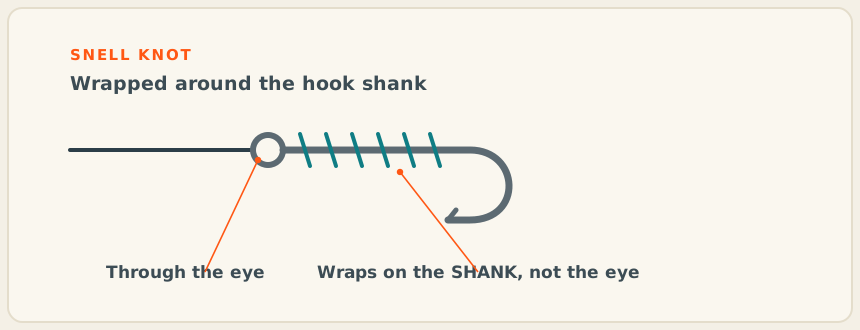
Diagram of the Snell Knot
How the knot goes together · watch the full animation below

The snell is different from every other terminal knot: instead of tying to the eye, it wraps the line around the hook shank. That puts the pull directly in line with the hook, which improves the way it sets, a real advantage with bait and, especially, with circle hooks.

When and why to use it

Snell a hook for bait fishing, chunking, bottom rigs and any presentation using a circle hook, where the inline pull helps the hook rotate into the corner of the jaw exactly as it is designed to. It is a natural fit for bait fishing and building high-low rigs, and it lets you add a second snelled hook or a dropper cleanly.

How it works

You pass the line through the eye, form a loop back along the shank, then wrap the tag around both the shank and the loop several times before pulling the standing line to tighten the coils down the shank. On an up-eye or straight-eye bait hook it produces a clean, strong, inline connection.

Regulations Remember that Massachusetts requires inline (non-offset) circle hooks when fishing bait for striped bass, snelling is a great way to rig them. Confirm current rules with Massachusetts DMF.
From the page to the water

Learn it here, land it out there

Reading is a great start. The fastest way to get good is a day on the water with someone who does it every day.

Book a trip with Captain Nick

Note: fishing regulations (size limits, bag limits, seasons, permits) change often. Always confirm current rules with the Massachusetts Division of Marine Fisheries (saltwater), MassWildlife (freshwater), or NOAA Fisheries (offshore/HMS) before you keep a fish.