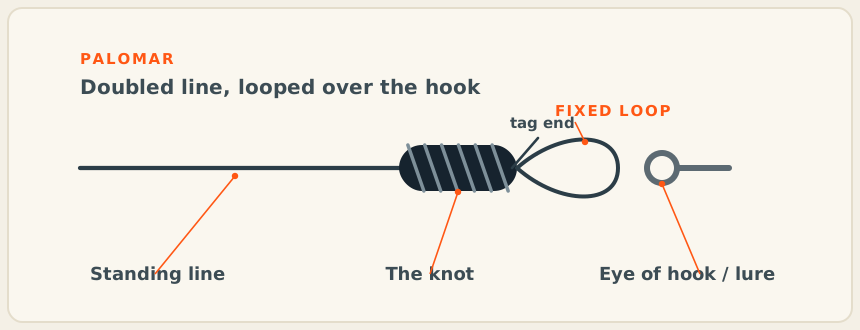
If you fish braid, the Palomar is your terminal knot. It is one of the strongest connections you can tie, it is simple enough to tie in the dark, and it grips slick braided line where knots like the clinch slip. It is also the base knot for the drop-shot rig.
When and why to use it
Use the Palomar to tie braid to a hook, lure, jig or swivel, where its strength and grip really shine, and any time you want maximum knot strength in mono or fluoro too. It is the standard for drop-shotting and a great all-around terminal knot. The one limitation: you have to pass a loop of line over the hook or lure, so it is awkward with very large lures or heavy leaders.
How it works
You double the line, pass the loop through the eye, tie a simple overhand knot with the doubled line, then pass the whole hook or lure through the loop and cinch. That is it, three steps, and it seats into a compact, extremely strong knot.
Tip Keep the doubled line from crossing as you cinch, and wet it first. If the two strands seat neatly side by side instead of crossing over each other, the Palomar delivers its full, near-100-percent strength.